America has a metal problem
There is unprecedented demand for compute. We can't make chips fast enough. But a datacenter requires a lot of steel, copper, aluminum and concrete before it needs a single GPU. Datacenters went from about 1.7% of US private nonresidential construction spending in 2019 to 5.4% in 2025. 3x their share in 6 years.
A large electrical contractor in Utah told me recently that the only thing they can reliably get on time for their datacenter builds is concrete, because concrete is local. The same contractor is calling all the other electrical contractors in town to help, because they need everyone they can possibly get.
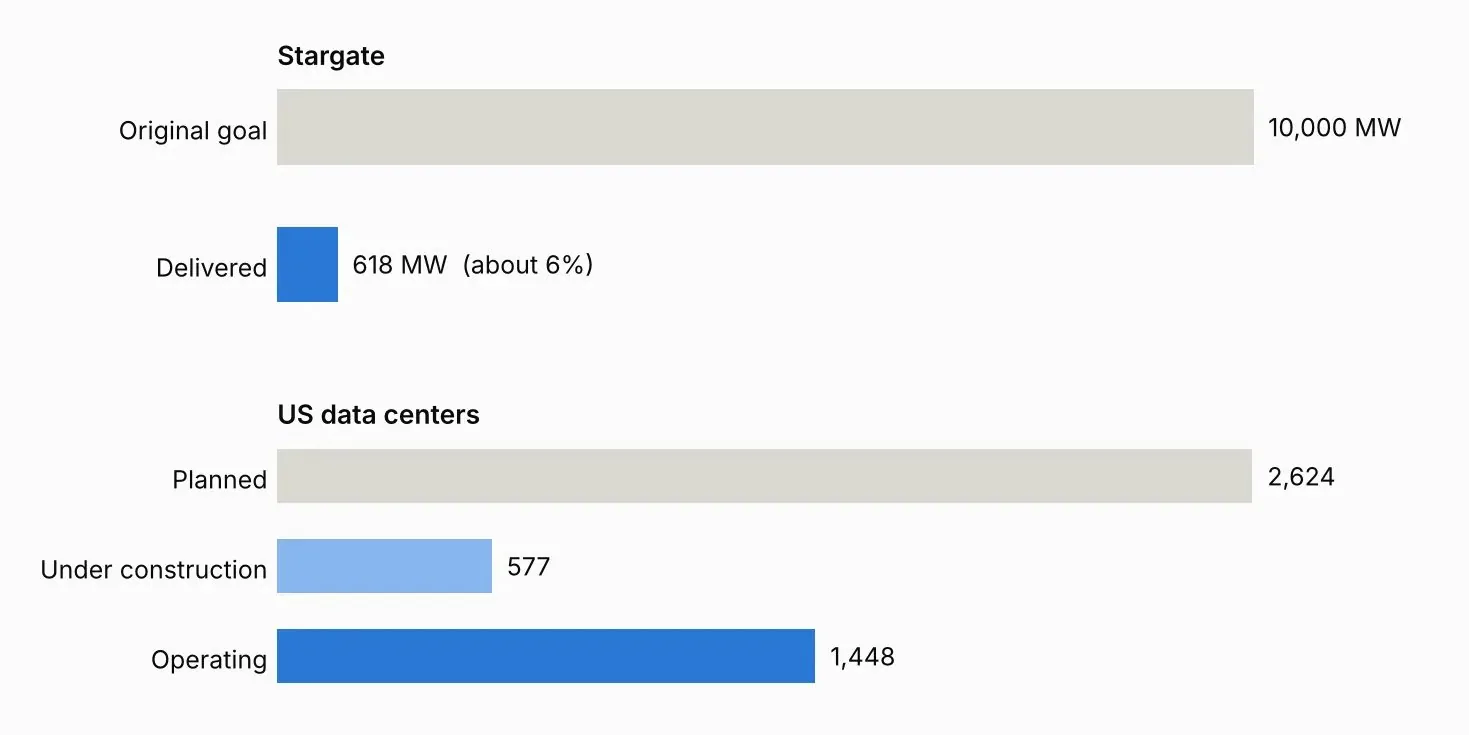
There are a number of mega-projects underway, but it will be some time before they're up and running. Not to mention we don't actually know how to do this yet given resource constraints. Stargate had 618 MW running as of September, about 6% of its original 10 GW goal. Nationally there are nearly twice as many datacenters planned as operating.
To build any of it, we need more metal. We then need to process that metal into something useful. And we'll need energy for both of those things. For megaprojects to exist, someone has to fund them, and for private capital to be interested, they'll need to be derisked and aided by policy. We tend to lump all that together and only fund a piece of it, when they're really very different problems.
The last few decades we spent optimizing the cost of buying commodities while ignoring the value of maintaining the industrial capability to produce them. Now we're sprinting trying to rebuild several interdependent industries at the same time, and throwing money at one part of the problem doesn't necessarily solve the others.
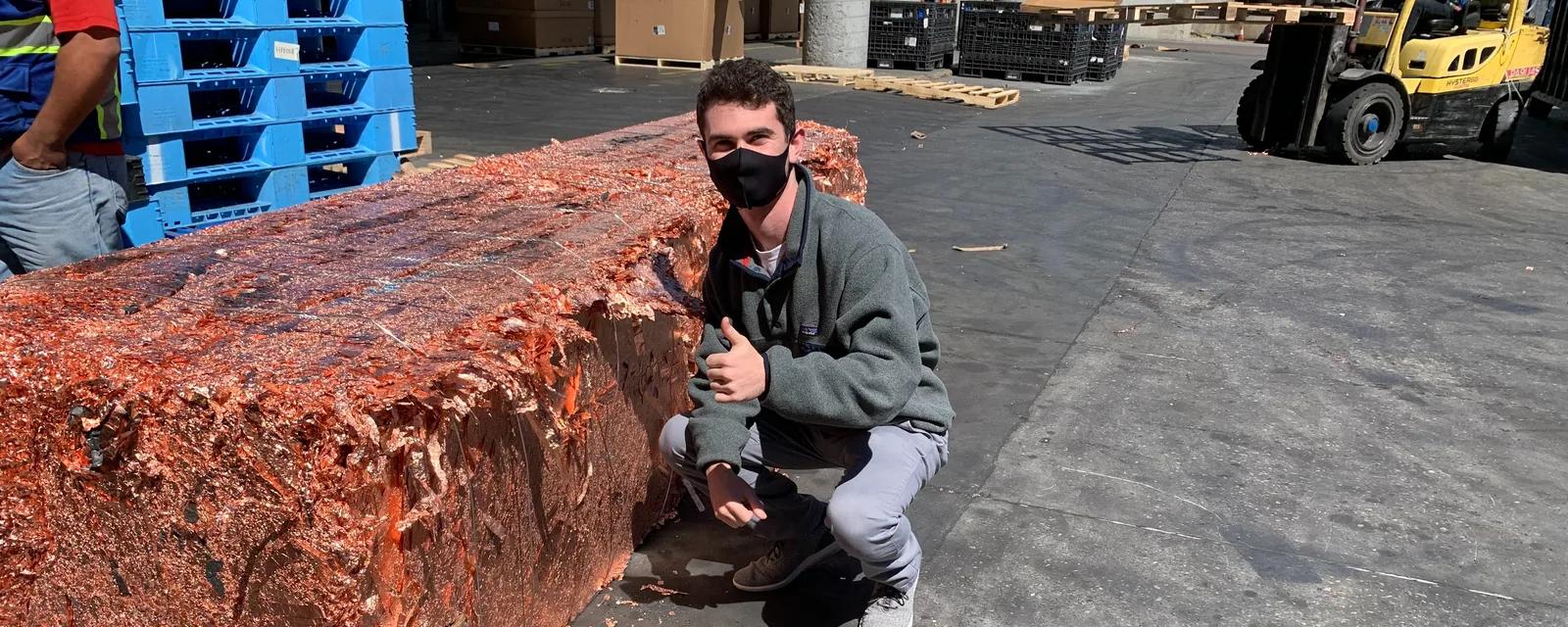
I started my career buying steel, copper and other raw materials at Tesla, and spent the last 18 months touring hundreds of American factories who buy this stuff on a smaller scale.
Margins and value aren't the same thing. Margin is how you build a profitable business and developing capability (including energy production) over time is how you build a durable one.
I suspect the fastest way to get that capability back is to give buyers a reason to commit to it.
we need more metal
Commodities, and their production processes, are the most underrated part of the industrial economy. Though they're among the most traded assets in futures markets, conversations in capital circles center around more speculative areas like chips, ai and robotics.
A commodity is a utility item. In theory, something abundant and easy to get, like a ton of copper or a steel coil, and bought at a globally competitive price from whoever can make it the cheapest. For most of the last 40 years, that was a reasonable assumption as we opened up trade with the rest of the world and natural resources flooded across borders.
But an explosion of demand (and a few concurrent supply shocks) has changed the paradigm. We now live in a world where materials are tools of geopolitics. We've got the AI datacenter buildout, a wave of impending grid and infrastructure construction, new techno-industrial companies and established manufacturers scaling production at the same time.
Previously common materials now behave more like strategic assets than they ever have. Governments license, ration and ban exports of them, and prices have exploded: cobalt is up 160% since the DRC cut off exports in 2025, and tungsten rose ~10x in a year.
Even standard flat-rolled steel from US mills averages ~8 to 9 weeks, the longest since 2021. In this red-hot market, certain grades of steel are running 30+ week lead times or longer, and structural steel has hit 40 to 50 weeks.
With proposed grid upgrades, new factories and public works competing for things like structural beams, switchgear and transformers, NREL estimates transformer supply alone may need to grow 160 to 260% by 2050. Which means we're going to need a whole lot of electrical steel and copper (and new transformer manufacturers).
Large and small manufacturers are reshoring and expanding at the same time, putting additional pressure on the same mills, smelters and service centers.
Assuming we wanted to 100% reshore overnight, we couldn't. We don't make enough (material) to cover our demand. Barriers to entry are extremely high for new entrants, and funding them is a herculean task.
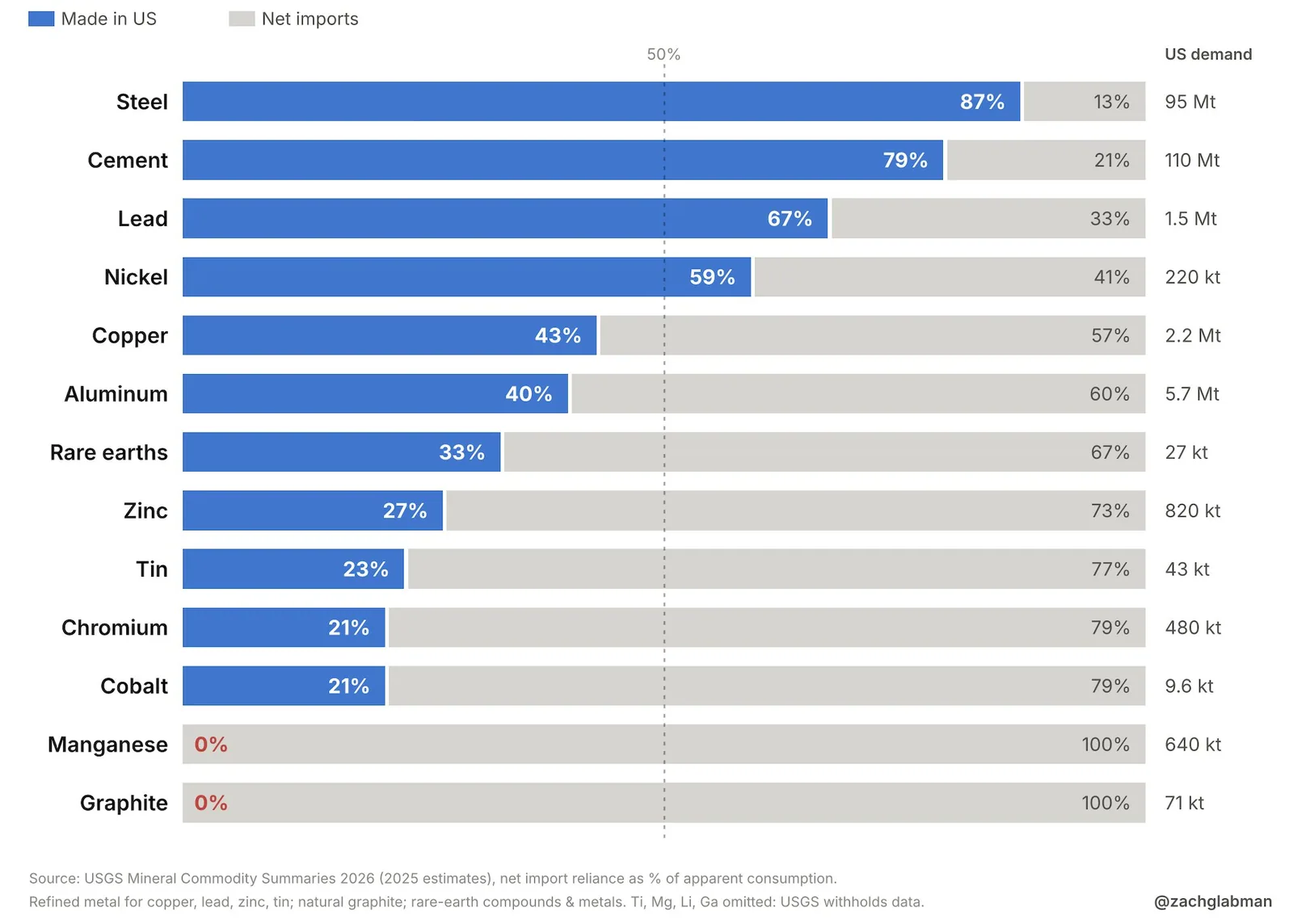
Demand went from 0 to 100 overnight, but supply can't respond in kind. Global copper mine production fell 1.1% in the first half of 2026 even as demand grew. Ignoring the fact that a new mine takes years to permit and build, the cheap energy required to make new and existing smelters economical is pretty far out without new technology.
Most of the "US-made” nickel, cobalt and chromium is scrap remelt. Excluding scrap, nickel imports are nearly 100%. The 40% of aluminum supply is secondary metal, while primary smelting covers only ~12% of demand.
we need to process it here, too
Most of the value accrual in raw materials comes from processing. That is smelting, refining, alloying, rolling, forging or casting that turns ore or raw metal into something useful. That knowledge took decades to accumulate and mostly lives in people's heads or behind lock and key at massive global companies.
The old logic around thin-margin, cyclical commodity production was that it should be priced globally. If design and IP came from components and brands anyways, why should we do the dirty stuff if someone else can?
At large manufacturing companies, the task of getting the goods falls to procurement teams. And supply chain is often a cost center. That means "strategic supply chain" was a thinly-veiled way of saying cheapest, best, fastest, no matter the source.
For a while, sourcing wherever ore was cheapest, letting mines open in underregulated places with cheap labor was a great play. Many buyers hedged price risk on the LME and COMEX (still the standard). And that works as long as the physical stuff is abundant and we're in peacetime. Trading a contract on the idea that I-beams will exist doesn’t get you any actual I-beams.
The flaw in that logic is that it treats everything between raw ore and the factory as one undifferentiated pile of dirty work. Extraction and processing are very different businesses. Ore is either there or it isn’t. Processing, like any other value-added manufacturing process, is an art and a science.
Turns out having mineral resources, refining capacity, and manufacturing something with refined materials are each hard problems on their own.
The most common pushback to re-industrializing I hear is that "our labor will never be as cheap as China's". Labor is the least interesting part of China’s advantage. Nor is their labor all that cheap. They have cheap power, state finance pointed at manufacturing, and a very high tolerance for pollution.
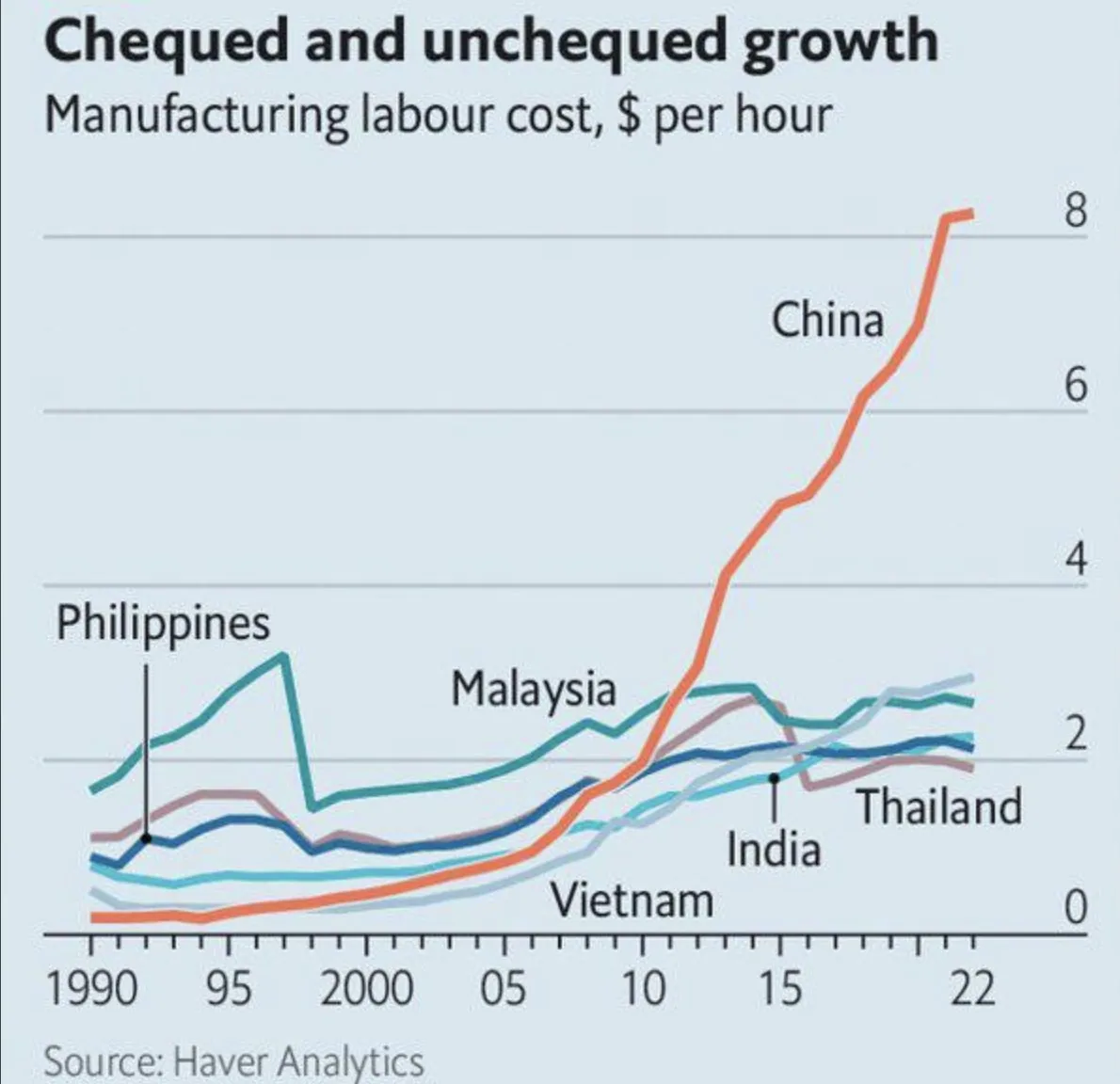
Labor is just a small piece of the pie in processing economics anyway. In materials processing, yield determines how much saleable product you get from every unit of input. Uptime determines how much output you get from the equipment you've already paid for.
A process that recovers 98% of its input instead of 92%, or runs 95% of the time instead of 80%, can change the economics of a plant far more than a difference in hourly wages. Investing in process technology creates a competitive advantage: producing more with less energy, less material and less labor.
Rare earths are proof of this. China mines about 61% of the world’s rare earths but refines 91%. Molycorp mined and separated rare earths at Mountain Pass in California for decades, until environmental problems and cheaper supply elsewhere hit them hard in the 2000s. Didn't help that we regulated the shit out of anything dirty until it became impossible to build and operate here, reinforcing dependence on someone else, mostly overseas.
Mountain Pass was financially underwater until MP came in. The way the tech tree evolved and through faux pas like the Magnequench deal (GM selling off their magnet biz to the Chinese), owning the deposit turned out to matter much less than the processing of raw materials.
Everyone seems to understand this better than we do. Indonesia banned raw nickel ore exports in 2020, which forced anyone who wanted their nickel to build or use smelters in Indonesia. China has gone a step further and completely restricts exports of processing technology: rare earth separation in 2023, then lithium extraction and battery cathode technology in 2025. If refining raw materials were truly commodity work, no government would bother export-controlling it.
The list of restricted materials is long now, and it keeps getting longer:
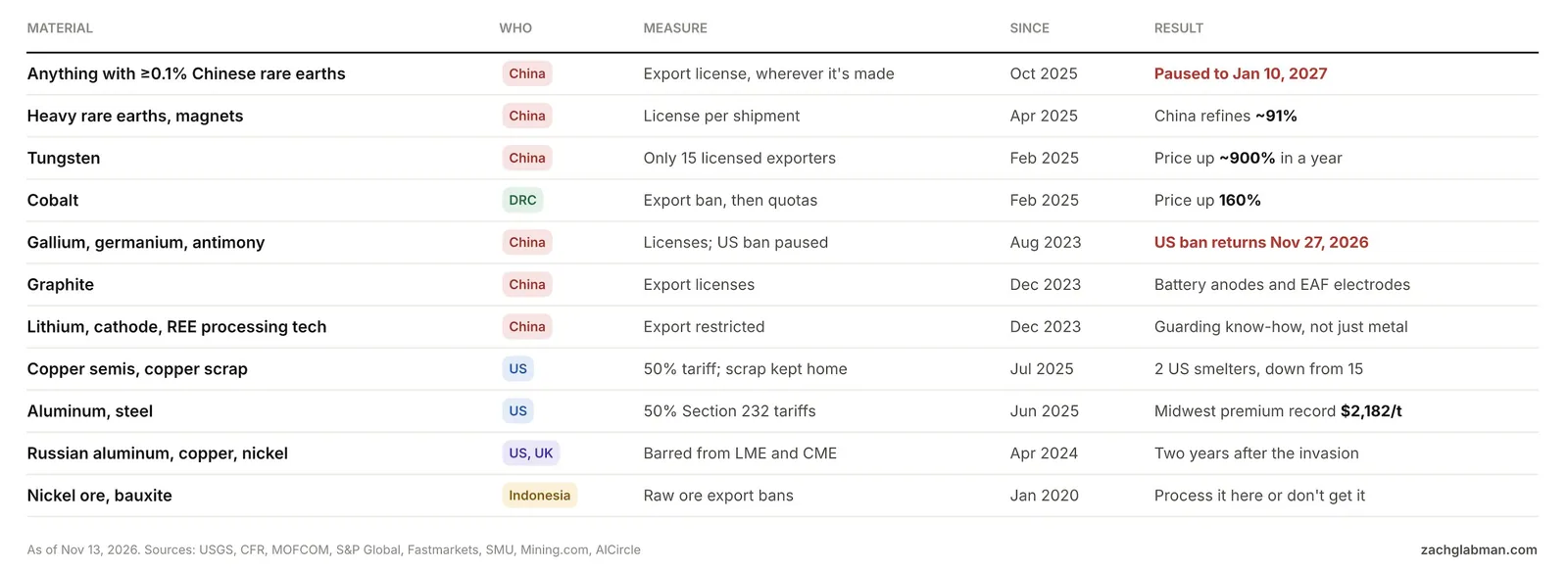
The US and China fighting over materials is familiar by now. But the DRC, Indonesia, the EU and the US all use export controls too. In times of geopolitical strife, countries are quick to recognize the leverage their raw materials give them. Controlling them, is coherent industrial policy.
When Russia invaded Ukraine in February 2022, Nornickel was the largest supplier of refined nickel to the LME. It took until April 2024 for the US and UK to bar new Russian aluminum, copper and nickel from the LME and CME. Titanium and platinum group metals were left out entirely, because Russia supplies too much of both. You'd think we'd have learned from the Soviet shovel affair. To me, "too strategic to sanction" is a scary concept.
Meanwhile China's widest rare earth restriction keeps getting paused or pushed out - most recently to January 10, 2027. Magnet makers are stockpiling and rewriting contract clauses to cover it, because nobody knows what happens next.
And uncertainty is rather expensive.
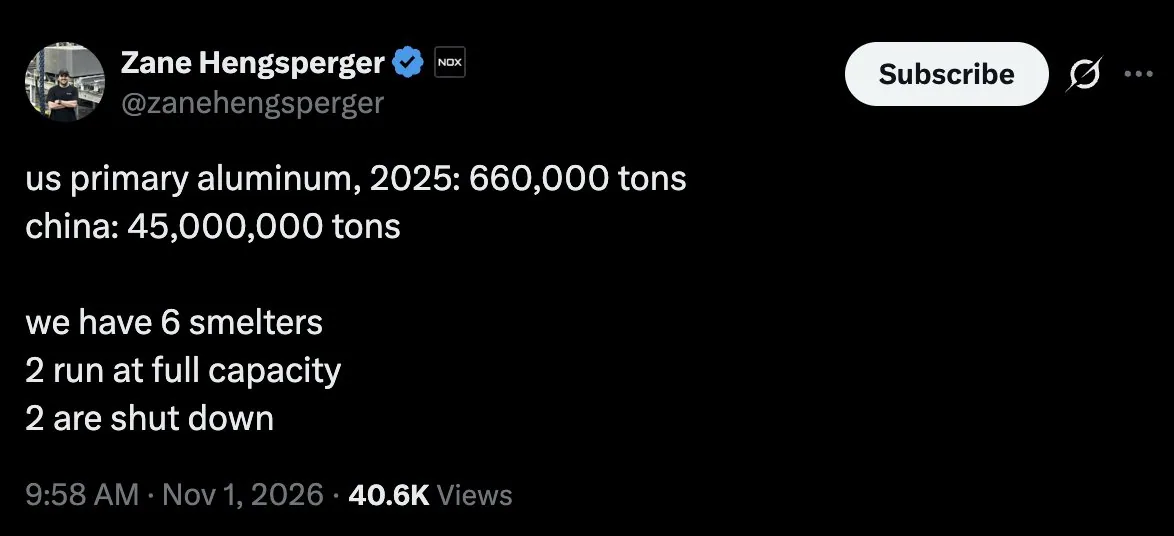
Unfortunately this is also true of the most basic "commodity" metals in the economy (copper, steel, aluminum). America had up to 15 copper smelters in its heyday and has two today. We still mine copper in Arizona, but a lot of that concentrate goes to China, which smelts more than half the world’s supply. And we now use roughly twice the refined copper we produce.
I was buying a lot of metal during the last commodity supercycle. Price hikes were mostly driven by aftershocks from COVID factory shutdowns, inflationary monetary policy and China's insatiable hunger to electrify. But demand has always been there and continues to grow.
fighting over power
All of this capacity is bottlenecked by energy economics. It's a catch-22: we need more energy for more refining, need more refined materials for energy production. This is all highly energy-intensive work, but it's worth it. Every rich country got there by being energy-abundant first.
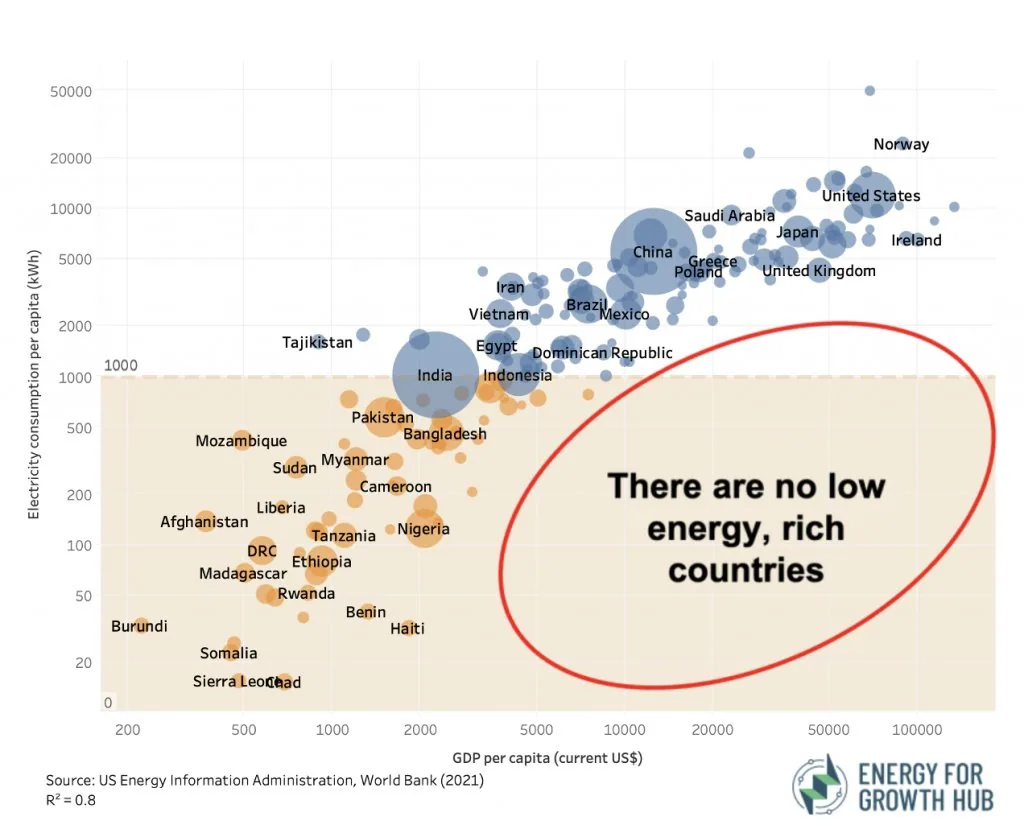
The energy gap is much more obvious now. These puppies are expensive to run, and we’re going to need to get pretty creative about how we power them.
Take aluminum. If we can ever get it over the line, the first new aluminum smelter in 45 years will run on Emirati cell tech. It would also use more than 11 TWh (11,000 GWh) a year, about what a major city like Boston or Nashville uses. The Aluminum Association says a new US smelter needs a 20-year power contract at $40/MWh or less to work at current prices.
Now look at who else wants that power. Tech companies are bidding upward of $115/MWh for datacenter power. Electricity is a small fraction of a datacenter's costs, compared to the chips. For a smelter it's a meaningul percentage of the cost of every ton produced. A smelter has historically needed a huge, fixed, firm load at a cheap price or the unit economics aren't there. It has not been economical to build one of these for a long time. When the smelter bids against a datacenter, it will lose.
Sidebar: operating a smelter as a battery is underexplored in the US. Trimet is making waves here with heat exchangers to absorb swings in power. Generally, anything that makes heavy industry easier for the grid to host is a big opportunity.
The transformers, switchgear and wire we need to build out the grid are made of the same copper, aluminum and electrical steel. The grain-oriented electrical steel (GOES) in transformer cores has exactly one domestic source: Butler Works in PA.
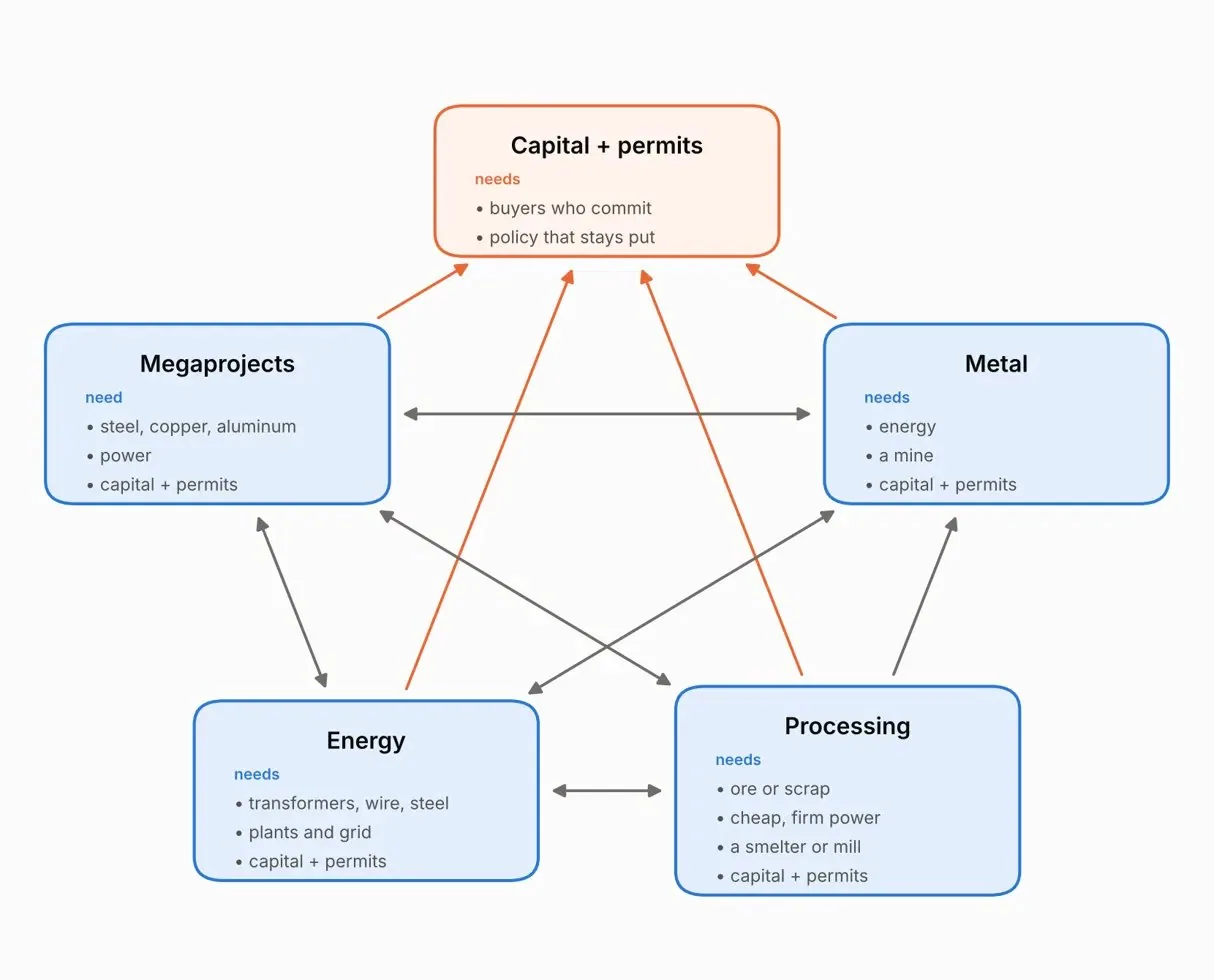
funding megaprojects
Whether or not they plan to verticalize, the companies growing fastest have figured out that strategic raw materials are a huge problem and a massive barrier to growth. But greenfielding or even adding this capacity is constrained. It takes permits, power, offtakes, a ramp-up period, and patience above all else.
Only a few kinds of company can fund a megaproject like this, and usually they're already spitting off cash. Big players are paying the price. Over the last few years, Apple prepaid MP Materials $200 million for magnets, GM bought into Thacker Pass and Tesla built its own lithium refinery.

I will not mince words here, megaprojects are a huge operational and financial undertaking. And getting them permitted is annoying. Building just one assembly line in an existing factory is hard, let alone greenfielding a multi-billion-dollar industrial build.
US Mag(nesium) in Utah went bankrupt, and the state bought the site for $30 million. This month it picked a company to plan a phased restart.
In Arizona, Grupo Mexico says it will spend $4 to $6 billion (!) on Asarco, including restarting the Hayden copper smelter. There's no restart date yet, and nobody has been clear what permits it needs.
In North Carolina, the Pentagon agreed to buy $90 million of lithium from Albemarle's Kings Mountain mine back in 2023. Three years later, they're still waiting on state and local permits.
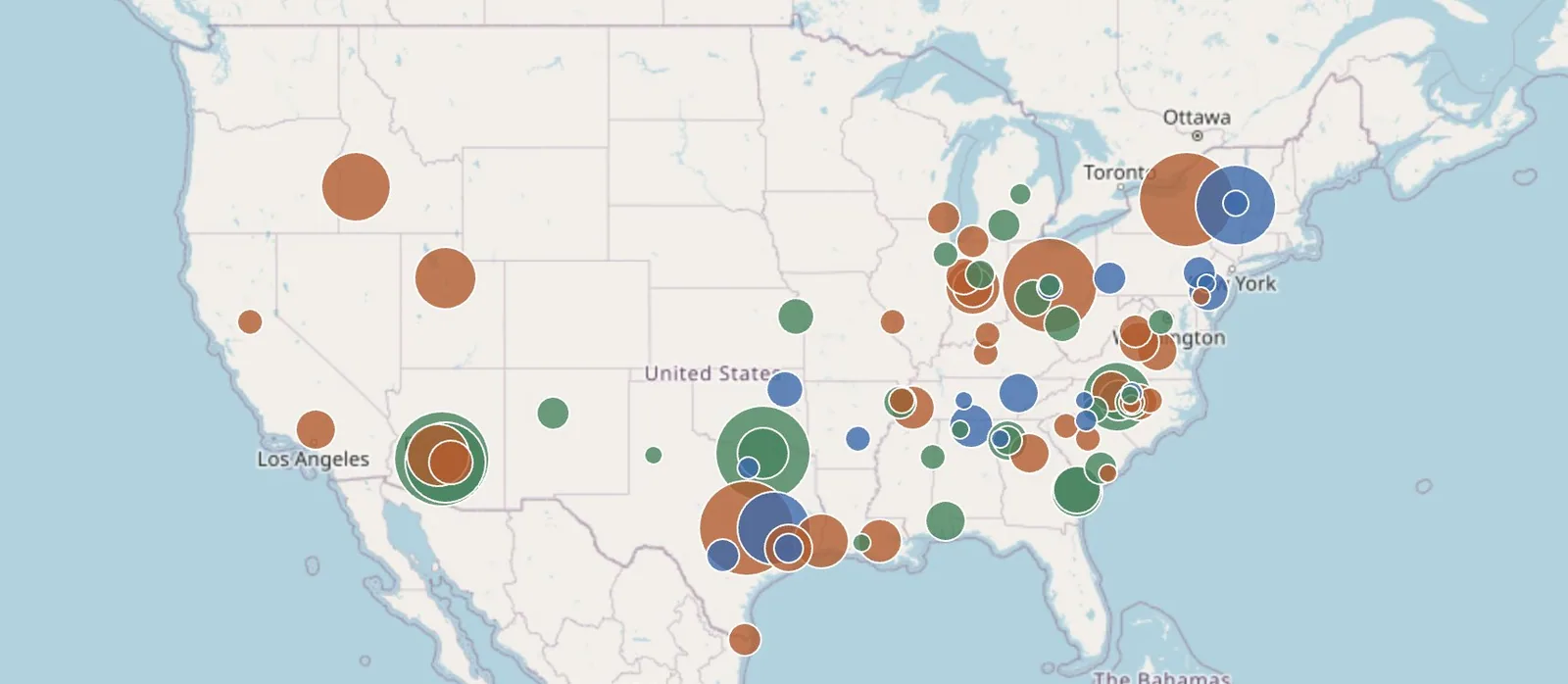
Opportunities exist where others aren’t looking, and processing is easy to ignore. It’s cyclical and capital hungry, and it pays back over a much longer horizon than most investments. It doesn’t fit a VC fund’s timeline, and the margins look thin until there's chaos somewhere in the supply chain.
Capital has shown it will fund staggering losses when it believes there is a prize at the end. Just look at the AI labs! A company that raised over $140 billion and had a -176% operating margin last year going public is absolutely wild to me. But people are investing in future potential. Tech-enabled smelters, refiners and mills need the same conviction in the future, more patience, and the energy to run them. Abundance is not free.
The thing datacenters have that commodities don't is that AI is highly "legible to capital" (and not just VC). Compute demand makes building more datacenters a no-brainer for big companies. It's not hard to see that more datacenters = more firepower for AI. But building a datacenter is still a big undertaking and requires a lot to go right.
With every big build, lenders want to see buyers before they fund a plant, and buyers want to see a plant before they sign. A datacenter gets financed because a creditworthy tenant, like a hyperscaler, signs a long-term lease before the building exists. Lenders opt to underwrite the tenant to make the asset exist, rather than trying to price underlying assets.
Barring Apple and MP, materials don't have that today. And MP had some help from the Pentagon in the form of a price floor. Industrial assets are hard enough to price, so lenders default to what they can price, collateral and resale value of used equipment.
A lot of venture backed companies raise their rounds on non-binding LOIs or MOUs to give VCs confidence that somebody will want their stuff. And once some VC or government money rolls in, revolving credit facilities are much easier to get.
Washington has put about $10 billion into critical minerals since January 2025. Beyond federal money, commercialization requires infrastructure, power, permits, customers, and all those parties making long-term commitments on timelines that rarely align.
buyers have to commit
All that to say, the ball is in the court of our buyers. At most large manufacturers, procurement is a cost center. I always found it silly how most of the focus goes to cost-downs, when the most transformative stuff can come from material or mechanical design changes with suppliers. Nobody is paid to commit to a decade of volume, so nobody does.
If OEMs want supply, they'll need to act like anchor tenants for the industrial base, and their finance teams need to treat a long-term offtake as a strategic asset.

With a binding commitment, the capital stack falls into place pretty fast. Heavy industry has been around a while and I'd argue the baseline economics are well-understood. The real outsized opportunity is in technology that can be layered on top, or that which changes how we build these assets entirely.
Venture and grants are still the right money for the bleeding-edge technical risk, like getting a new process to work at pilot scale. After that, the best way to fund a factory is by putting in orders - credible offtake is something a bank can lend against.
OEMs don't do this today for a few reasons:
- markets are cyclical, fixed prices are a no-go
- OEMs leave raw material buying to their suppliers
- commitments look like liabilities on a balance sheet
- offtakes don't make energy cheaper or the government permit faster
But these are (mostly) fixable. Offtakes don’t have to be fixed-price if you can index to the LME/COMEX with a floor and a ceiling (seen this in steel), roughly what the Pentagon did for MP. OEMs don’t always buy down to material level, so the commitment has to flow down through the tiers (Apple bought magnets, not oxide for example). A take-or-pay contract is a liability, but a line that goes down because you couldn’t get I-beams is worse. Offtake agreements are not a silver bullet. Commitment is necessary but not sufficient, and it has to run both ways.
Suppliers need to hold up their end of the bargain as well, but OEMs haven’t given them much reason to invest in new capacity. With much of our domestic demand concentrated in regulated industries, mid-tier suppliers can become dangerously dependent on a few customers. I often see over-concentrated suppliers go under because one OEM changed its mind.
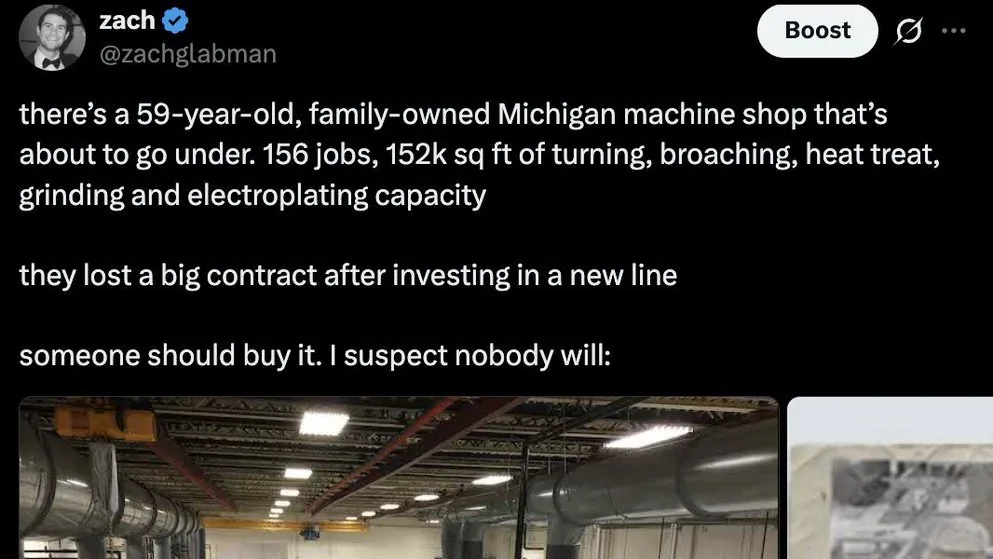
This kind of debt works best when the lender is close enough or cares to understand it. Germany’s manufacturers have a dense regional banking system, where local lenders know the shop, stick around through downturns and sometimes lend more if there's a credit slip. For the US, we'll need to create our own kind of "synthetic relationship banking" that fits our existing system, as the SBA has started to do with MARC.
If a company has a track record with their first plant, long-duration money should be able to invest in an expansion. Americans hold ~$51 trillion in retirement accounts, and almost none of it reaches domestic manufacturing. Pensions and insurers have liabilities that run for decades, and a smelter that pays back over twenty years is exactly the asset they should want.
Section 232 tariffs of 50% on steel, aluminum and semi-finished copper protect the producers we have, but they don't build new capacity. That takes technology that changes the cost curve, like new aluminum cell designs, electrolytic steel and direct lithium extraction, plus cheap, firm power where smelters can use it. And a backlog of buyers who are willing to commit to the output before it exists.
Policy has to stay consistent to derisk these investments. The Supreme Court already threw out the IEEPA tariffs. Going in and undoing the 232s by declaring them “illegal” is just about the dumbest thing we can do. Anyone planning for this to clear up next quarter with a “truce” is going to be in for a world of hurt.
Inertia is real, and buyers and sellers need someone to repair their relationship before anyone is going to change and make these big projects happen. The last real blocker I see is incoherent policy that changes every 2-4 years. Today, federal environmental reviews alone average about 4.5 years. With less permitting red tape, policy consistency and other backstops, private capital has fewer reasons to say no.
who gets the metal?
It's just the beginning for tight metal markets.
The week of November 2, Nucor pulled its secondary and excess bid lists and awarded zero tons. Secondary material, the off-prime and excess coil a mill sells off its bid lists, is normally where spot buyers find tonnage when prime is sold out. Shutting it off says Nucor has little surplus and is saving what it makes for prime and contract customers. Meanwhile, Nucor’s spot price for hot-rolled coil hit $1,280 per ton, its 15th straight weekly increase.
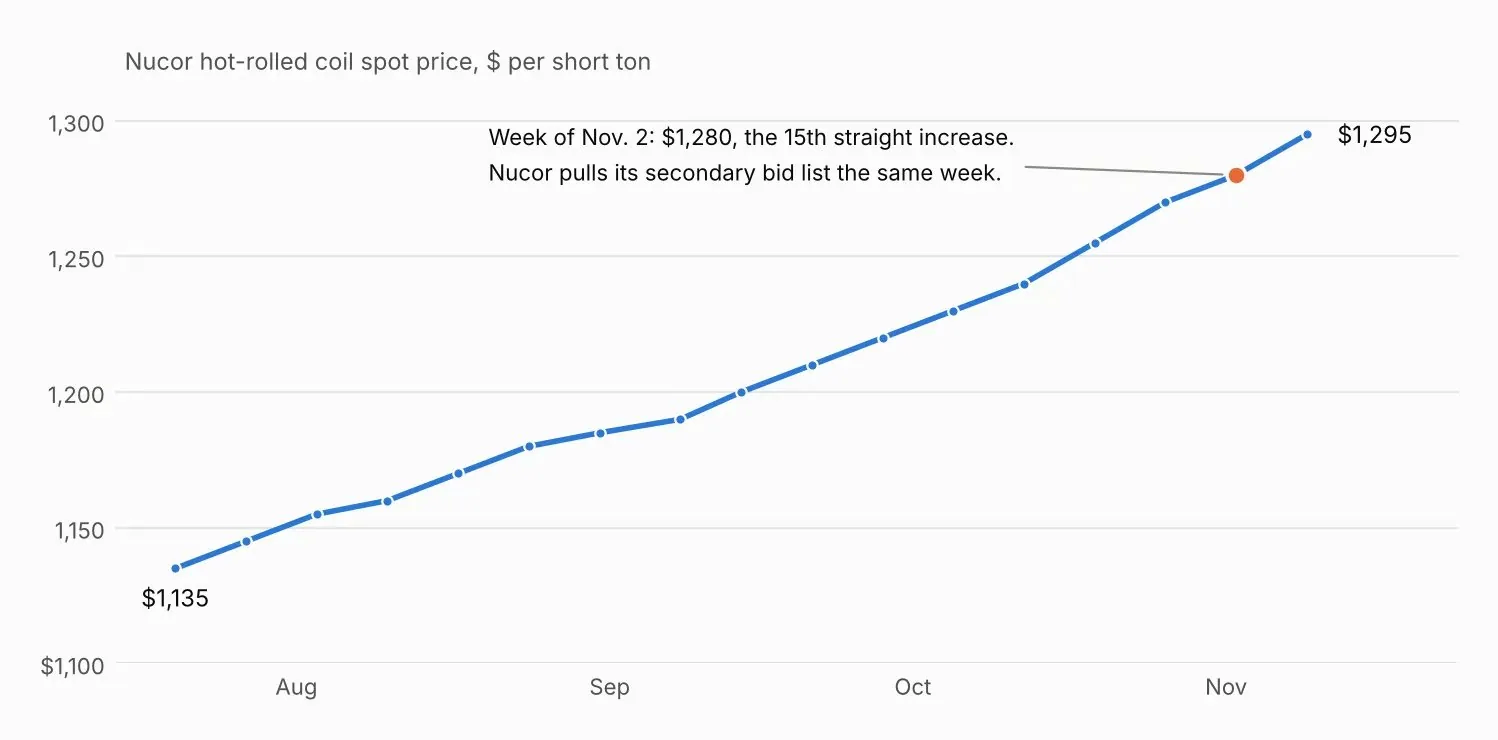
I'm starting to see this everywhere. When tube mills raised HSS prices $100/ton this fall, booked orders were price protected. It's great to be the guy with the relationship in a world where price increases suck or the metal literally is not available. I've never seen more pain than from the people trying to find structural I-beams right now (if you have any, please text me asap).
In a shortage, producers decide who gets material, and they pick customers they know and trust. Those who bought through a down cycle and paid on time will be in good position. Even if you can throw money at a supplier, they're not going to abandon their guy who they've been working with 30 years.
Everything is commitment, and we should be learning from the Chinese. Commitment issues will be our downfall if we can't figure out how to start running our own baijiu dinners.
the new adventure capital
Commodities were, at one point, the most speculative and lucrative thing one could get into. Adventure capital entailed sending sailors overseas to far-off lands in an effort to discover mineral deposits, treasures of unprecedented scale and goods provided by trade with new civilizations.
Mining, oil and mineral discovery are still lucrative. But financializing the economy gave us new and far more enticing asset classes we could model out in a spreadsheet. Now we can all trade options, futures, and derivatives from our phones, and venture valuations are priced on what might happen, rather than what exists. Not to mention they're much safer than seafaring.
We are in a very similar position today. It's going to take impossible commitment to the bit to finance and build the future we all dream of. We've made investing considerably more legible, and considerably safer. But I don't want to live in a future where we can speculate on, but not build the things the future requires.
The next great industrial fortunes will be made by people willing to go looking for value where everyone else stopped looking. If you throw a rock in any direction, there is a hard problem to work on. Many unsolved problems in the ore, the processing, in the components and subcomponents, on the factory floor, and in the scrap bin. There are new materials to discover, old processes to reinvent, and entire industries yet to be created.
If you're looking for the biggest opportunity in American industry, look underneath everything else. That is how we make the everything else possible.
Every hardware company is a materials company eventually. Trillions of dollars of value is trapped in our supply chains, and it's our job to figure out how to get it out.