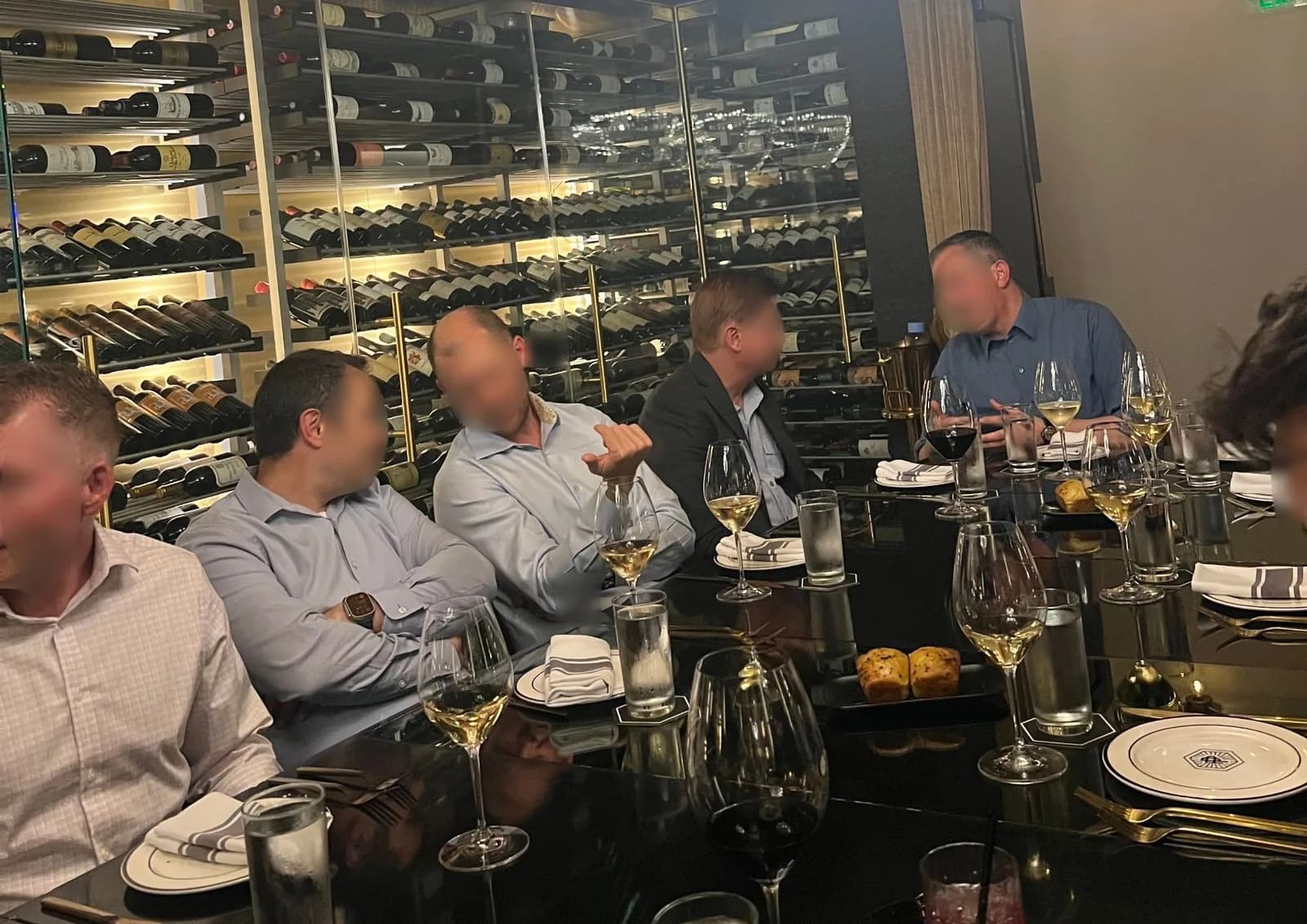
If you’ve ever worked with a Chinese supplier, you’ve probably been to a baijiu dinner: round table, lazy susan, a bottle of Moutai, and continuous toasting until somebody can’t stand anymore.
You could be buying 100 parts from them, and they’re taking you to a disproportionately intimate setting, singing sweet nothings at karaoke and naming their firstborn after you.
The calculated vulnerability of a baijiu dinner serves a simple purpose: they want you to know quickly and early that you can lean on them. It’s a flashy first impression that sets the tone for the whole relationship. And it’s a call option.
The best suppliers in the world play a long game, because they know that something is going to break, and when it does, they want to be the first call.
Japan plays that game, in a very different way. Trust is earned and accrued over many interactions. They will take you out to dinner and drink you under the table, but they are not getting hammered on the first date.
Both countries industrialized rapidly in the 20th century, and the thing they have in common is that they see the forest for the trees. The one guarantee in life, and business, is that shit will happen if you play the game long enough. And when it does, you will be vulnerable. As will your supply base. Nobody wins when a line goes down.
So what happens when it does? In 1997, a fire leveled the Aisin plant that made a five-dollar brake valve used in every Toyota. The Toyota plant only carried four hours of them, so 18 factories went dark, stalling 14,000 cars a day, and Toyota figured it would take six months to replace the tooling.
Instead, 36 suppliers and 150 subcontractors stood up 50 improvised lines over a weekend, from blueprints, with no purchase orders. Toyota restarted in five days.
Those suppliers bought tooling, ran overtime, and turned away paying work to ship parts at no agreed price. Subcontractors were lending to Toyota—unsecured and at no stated rate. Because they knew they were good for it. More than thirty years of invoices were backing them, so the only question was how fast the line came back up.
Value in manufacturing comes from throughput, so the entire supply chain feels the pain of a line-down. Even the freight broker loses money.
Durable companies treat vendors like family before anything breaks, so when it does, the vendors act like it. Counterparties comply; kin show up.
Kinship is not a uniquely Asian trait. It's what comes naturally with a dense, demand-rich supply chain. The herculean effort to solve the line down from the Aisin fire happened in an industrial district packed with other large Toyota suppliers, within driving distance of the problem and of each other. Proximity, repetition, and the certainty of meeting again are a recipe for trust. Density of supply enables all three.
When a German chemical plant blew up in 2012 and threatened brake and fuel lines across Detroit, competitors sat in the same room and split up the work of qualifying substitutes. Alan Mulally (then CEO of Ford) went to Congress in 2008 to ask for a bail out for GM and Chrysler, because he knew 80% of their suppliers were his suppliers too.
But it takes a catastrophe to bring out this behavior. Day to day, America is good at governing transactions and bad at keeping partners. 40 years of financialization and offshoring taught the supply base what to expect from a buyer. Plenty of shops won't return your call, because they’ve been burned by enough tire-kickers that ignoring you is a fair default. I’d call this a kinship problem.
The case for building here is not sentimental, and it has precedent. The manufacturing density that built America’s middle class did so because it is deeply positive-sum for the place where it happens. Every dollar of domestic manufacturing value-added still carries another $3.60 behind it and each manufacturing worker supports roughly three more elsewhere, but only to the degree the chain is actually here. What accrues locally with a dense supply base is both capability and creditworthiness: trained people, tight iteration loops between design and production leading to greater innovation and stronger local communities.
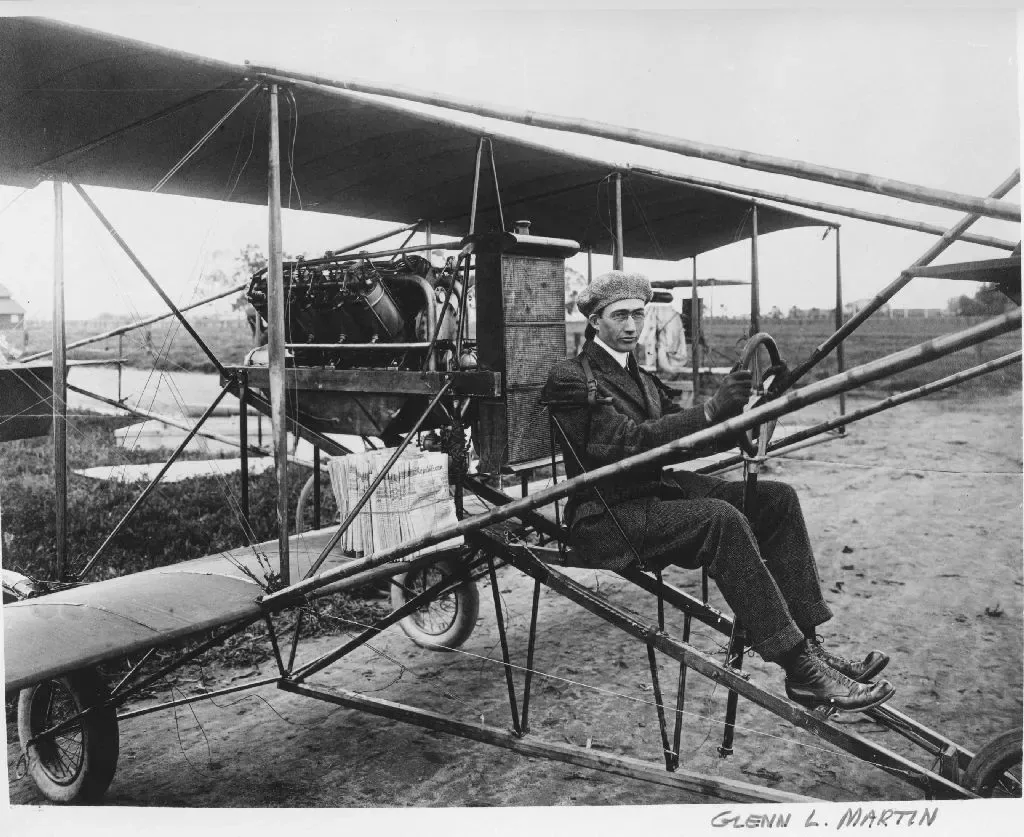
I like to say it is infinite sum because ingenuity produces benefits you cannot predict: everyone knows the Paypal mafia, but there is an equivalent and much longer history of industrial talent mafia from companies like Travel Air (Beechcraft, Cessna, Stearman), Glenn L Martin (Douglas, Bell, McDonnell), Hughes Aircraft (TRW, Litton), Coachmen (Forest River, Keystone, Grand Design), Fairchild (Intel, AMD, Kleiner Perkins) and Tektronix (Mentor Graphics, Planar). The next generation is coming out of Tesla, SpaceX, and Anduril.
I have spent the last 18 months in American factories, large and small. The American baijiu dinner doesn’t exist, because every short-run relationship starts over when there’s a new part to quote.
But the dinner was never really about the dinner. A guy is telling you, early and at his own expense, that he plans to be around when something gets messy. He is right that it will.
Here, it runs the other way. The shops are not the ones who have to prove anything. They have watched buyers come and go for many years. The American baijiu dinner is not something a supplier throws for you. It’s something you throw for them, before you need anything, when you are still small enough that it costs you something to do it.

It's on you to buy the call option on your local shops: book a flight, tour the plant, pay on time, buy the first round (or dinner). Show up before you need to because nobody else is doing it.